ORE Dental Exam Explained: The 2026 Guide for Foreign Dentists
Foreign-trained dentists who want to practise in the UK must pass the Overseas Registration Examination, and the ORE is a demanding test of both written knowledge and clinical skill. This 2026 guide explains the exam structure, what each part involves, and how to plan your preparation realistically.
Official-source review
This educational resource was checked against publicly available regulator and examination-board guidance. Rules can change, so confirm the current requirements on the linked official pages before applying, paying or travelling.
1. ORE Part 1 & Part 2 Breakdown
Part 1 is a computer-based exam consisting of two papers: Paper A covers basic science and clinical dentistry, while Paper B covers clinical governance and ethics.
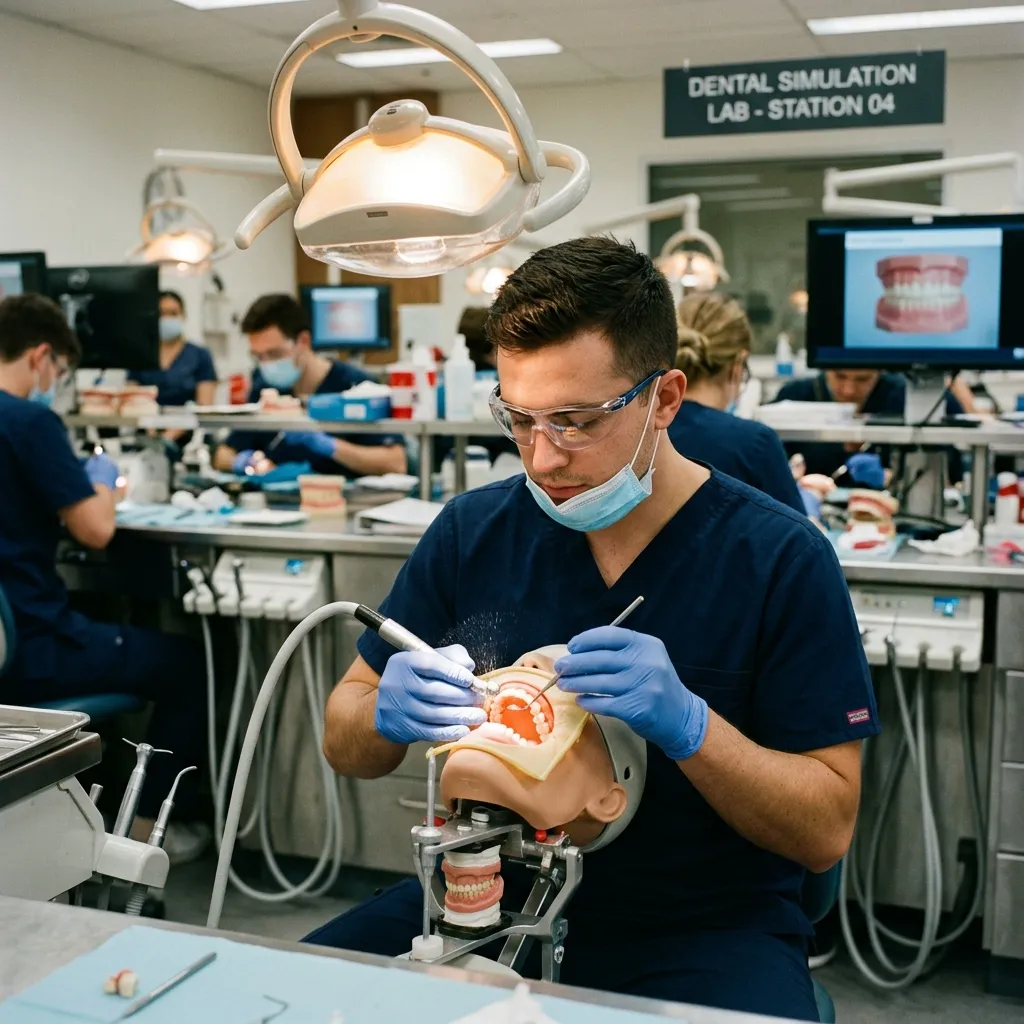
Part 2 is a clinical exam consisting of four components: An OSCE, an Operative test on a dental manikin, a Diagnostic and Treatment Planning exam, and a Medical Emergencies assessment.
Official baseline for ORE Dental Exam: for Foreign Dentists
the UK Overseas Registration Examination for dentists is governed by the General Dental Council. That body controls ORE eligibility, booking, assessment and the subsequent application to the dentists register. A tutor, recruiter or advisory service can explain the process and help a candidate prepare, but it cannot grant eligibility, change an official result, reserve a regulatory decision or issue a professional licence. For ORE Dental Exam: for Foreign Dentists, this distinction is the starting point because it separates useful preparation from a promise no private company has authority to make.
The GDC's published 2026 Part 2 fee is £6,967. Fees are normally non-refundable, so eligibility and availability should be checked before payment. Preparation providers are not the booking authority and cannot reserve a place outside the candidate's official GDC account. For ORE Dental Exam: for Foreign Dentists, read those rules as connected dependencies rather than isolated facts. A change at the eligibility stage can move the booking date, which can change document validity, travel plans and the date on which a registration application becomes possible. The safest plan records each dependency and names the official page that supports it.
For ORE Dental Exam: for Foreign Dentists, this research was checked on 28 August 2026 against GDC ORE overview and GDC ORE Part 1. Rules that involve fees, dates, delivery locations, attempts or accepted evidence can change during a candidate's preparation period. Save the page and the access date in your planning file, then check it again before payment and again before travel. A search snippet or an old course handout is not strong enough evidence for a high-stakes decision.
Build the pathway as a chain of gates
The ORE Dental Exam: for Foreign Dentists pathway is easier to manage when every step has an input, an owner and evidence of completion. Start with education recognition, then place language evidence, credential verification, assessment eligibility, booking, results and registration in the order required by the official body. Do not use a generic timeline until those dependencies are confirmed. Two candidates pursuing the same exam can have different start dates because one degree needs verification or one regulator requires pre-approval.
Most dentists whose primary qualification was gained outside the UK or EEA need an accepted registration route such as ORE before joining the GDC register. ORE Part 1 is an in-person computer-based test of applied clinical knowledge; Part 2 assesses practical clinical skills across four components. For ORE Dental Exam: for Foreign Dentists, put each rule into a tracker with four columns: action, official owner, proof of completion and expiry date. The expiry column catches avoidable failures such as language evidence ageing out before registration or an exam authorisation ending before a suitable appointment is available.
Add a stop condition to every ORE Dental Exam: for Foreign Dentists gate. If the qualification is not recognised, if an official response is pending or if a required document cannot be obtained, pause spending on later stages. Preparation can continue where it remains useful, but flights, non-refundable bookings and paid verification services should follow confirmed eligibility rather than optimism.
The evidence file that saves weeks later
Create one folder for ORE Dental Exam: for Foreign Dentists with subfolders for identity, education, registration, English, examination and correspondence. Use filenames that include the document type and date. Keep the original-language document beside its certified translation, and record who sent an official transcript or verification request. This is basic administration, but it prevents a missing page or mismatched name from becoming an expensive delay near a booking deadline.
The working checklist for ORE Dental Exam: for Foreign Dentists is specific: track the five-year clock from the first Part 1 attempt; use current booking dates rather than mailing-list rumours; map preparation to GDC learning outcomes. After those are complete, budget Part 1 and Part 2 separately; keep documentary evidence of bookings, payments and results; confirm ORE eligibility and submit a complete application. Mark an item complete only when there is evidence, such as a portal status, receipt, verification response or regulator email. A note saying "submitted" is not the same as an accepted document.
For ORE Dental Exam: for Foreign Dentists, check identity consistency across the passport, candidate account, degree, transcript and professional registration. If names differ, ask the regulator which linking evidence it accepts before uploading an improvised explanation. Keep unredacted identity files out of shared study drives. Tutors usually need performance data, not passport scans or regulator passwords.
- track the five-year clock from the first Part 1 attempt
- use current booking dates rather than mailing-list rumours
- map preparation to GDC learning outcomes
- budget Part 1 and Part 2 separately
- keep documentary evidence of bookings, payments and results
- confirm ORE eligibility and submit a complete application
A worked planning scenario for ORE Dental Exam: for Foreign Dentists
For ORE Dental Exam: for Foreign Dentists, consider a hypothetical candidate who wants to act within six months while working clinical shifts. The candidate first checks GDC ORE overview and writes down the current eligibility rule. Next comes a timed diagnostic or document audit, depending on the article's goal. Only then does the candidate choose a preparation resource or pay for a service. This order may feel slower for one afternoon, but it removes the much larger risk of preparing for the wrong assessment or missing a prerequisite.
For ORE Dental Exam: for Foreign Dentists, the candidate keeps two calendars. The official calendar holds application windows, evidence expiry, result dates and registration deadlines. The study calendar holds weekly outputs and mock assessments. When performance is behind plan, the study calendar changes; the official deadline does not. If the gap becomes unsafe, the candidate moves the sitting rather than buying a promise of a last-minute shortcut.
At the final ORE Dental Exam: for Foreign Dentists checkpoint, the candidate can answer five questions without guessing: Who makes the decision? What evidence is still pending? What happens if the result is unsuccessful? Which fees are non-refundable? What is the next lawful step after passing? If any answer is unclear, the next action is an official enquiry, not another commercial purchase.
Failure modes that basic summaries miss
The first ORE Dental Exam: for Foreign Dentists failure mode is category confusion. Candidates mix up an exam pass, an equivalence certificate, registration and a licence. Candidates have four attempts at each part and must pass Part 2 within five years of the first Part 1 attempt. Write the desired end state in full and work backwards from the body that grants it. That exposes missing stages that a headline such as "pass and work abroad" conceals.
The second ORE Dental Exam: for Foreign Dentists failure mode is stale precision. A page repeats a fee, date, pass rate or number of questions after the official body has changed it. The new contract increased first-year capacity to 2,400 Part 1 places and 944 Part 2 places, but candidates still need to follow timed booking windows. This is why the article gives a review date and links the primary source. Use precise numbers only when they help a decision, and recheck them at payment.
The third ORE Dental Exam: for Foreign Dentists failure mode is weak readiness evidence. Reading notes and recognising explanations can create confidence without recall under pressure. Use timed mixed work, spoken cases, document dry-runs or calculations with full working, depending on the task. A mock score is useful as a trend, not as a guarantee. The decision to sit should combine recent performance, health, logistics and the cost of an attempt.
Questions worth answering before you pay
Before paying for ORE Dental Exam: for Foreign Dentists, ask the provider what part of the official process it supports, which public blueprint its teaching follows and what happens if the regulator changes the format. Ask whether access expires, whether feedback is individual, whether a sample is available and which refund terms are binding. Do not accept a pass-rate percentage without the sample size, time period, inclusion rules and a way to verify the result.
For a ORE Dental Exam: for Foreign Dentists comparison or review, test each product against the same needs: realistic task format, quality of explanations, feedback on weak areas, accessibility, update policy and total price. Brand popularity is not a learning outcome. A smaller resource that corrects the candidate's measured weakness can be more useful than a large library that repeats material already understood.
For a ORE Dental Exam: for Foreign Dentists pathway, ask the regulator about the candidate's facts rather than a hypothetical. State the qualification, country, graduation year, current registration, target professional title and intended jurisdiction. Keep the written response. It will be more valuable than a forum answer from somebody whose route looked similar but depended on different rules.
Primary sources and update discipline
The sources used for the ORE Dental Exam: for Foreign Dentists expansion are GDC ORE overview, GDC ORE Part 1, GDC ORE Part 2, GDC booking dates. They were selected because they are controlled by the examination, accreditation or licensing bodies that make the relevant decisions. Commercial comparison pages can help identify products, but they are not the authority for eligibility, attempts, accepted evidence, dates or professional registration.
When two official ORE Dental Exam: for Foreign Dentists pages appear to conflict, prefer the page for the exact service and current cycle, then ask the body to clarify. Capture the URL, page title, access date and the rule that affected the plan. Avoid copying long passages into notes because the copied text loses navigation context and can become stale without notice.
A research-backed ORE Dental Exam: for Foreign Dentists article should make future verification easier. It should show the reader where a rule came from, which facts are time-sensitive and what remains a personal decision. That is the standard applied here. The article explains the reasoning, but the linked official source remains the final check before a candidate submits, pays, travels or relies on the information professionally.

Dr. Bruno Grindewald, MD, MRCP
Senior Medical Instructor & Lead Clinical Editor
Dr. Bruno Grindewald is a specialist in postgraduate medical training and clinical diagnostics with over two decades of experience preparing international medical graduates for Royal College sittings and licensing examinations worldwide.
Frequently Asked Questions
Is the ORE harder than the LDS?
The ORE and the LDS (Licence in Dental Surgery) are similar in difficulty and both lead to GDC registration. Many candidates apply for both to increase their chances of securing an exam spot.
What is the most common reason candidates fail the Dentistry exam?
Dental licensing candidates most often fail because they over-weight recall of the basic sciences and neglect the applied components. Modern dental exams weight clinical decision-making, radiograph interpretation and patient-safety and ethics questions heavily, so practising on case-based scenarios is what separates passes from fails.