NAPLEX Calculations: Mastering the 5 Hardest Topics in 2026
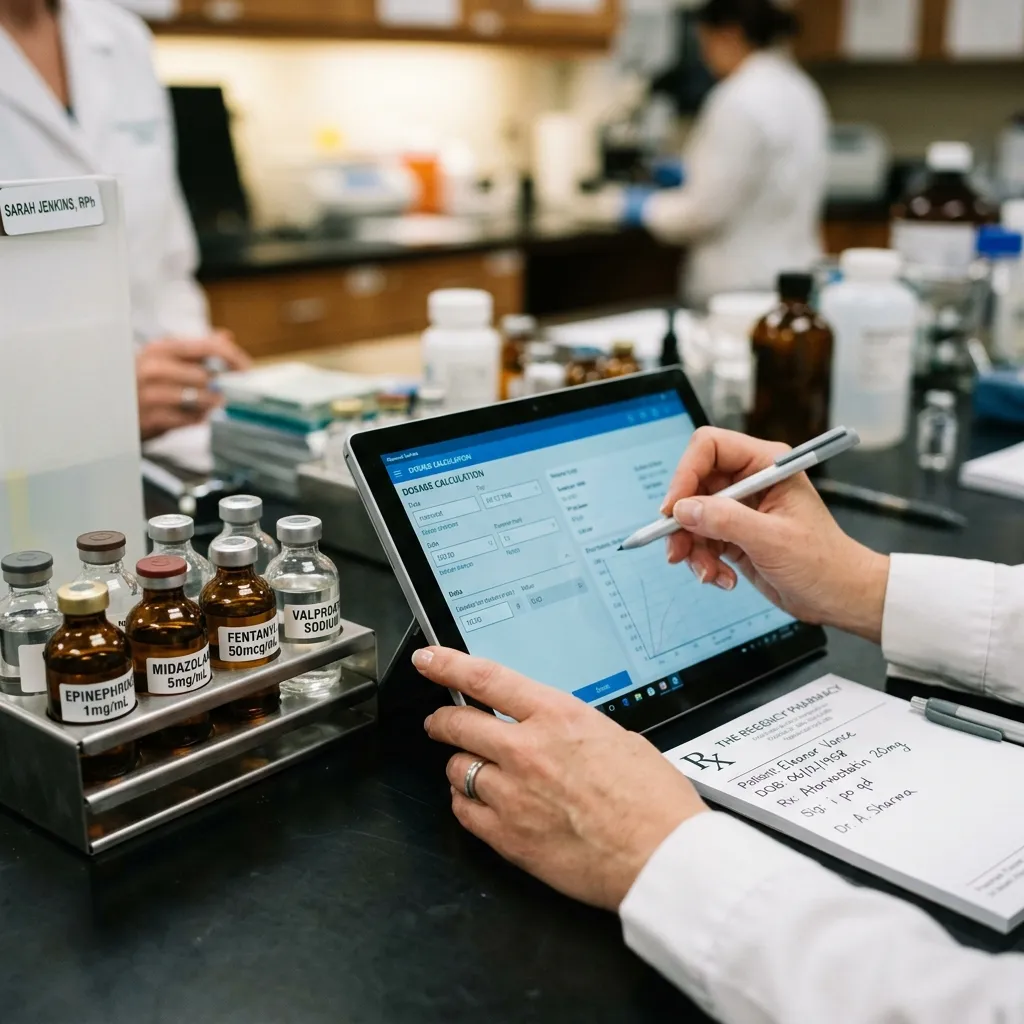
Calculations are where most NAPLEX candidates quietly lose points, and a handful of topics cause the majority of errors. This guide breaks down the five hardest calculation topics on the 2026 NAPLEX and the exact practice approach that fixes each one.
Official-source review
This educational resource was checked against publicly available regulator and examination-board guidance. Rules can change, so confirm the current requirements on the linked official pages before applying, paying or travelling.
1. The Big 5 Math Challenges
The Big 5 Math Challenges requires a structured and professional approach.
- TPN (Total Parenteral Nutrition): Calculating calories, proteins, and electrolytes.
- Alligations: Mixing two different strengths of a substance.
- Pharmacokinetics: Vd, Cl, and Half-life math.
- Milliequivalents and Millimoles: Atomic weight conversions.
- Flow Rates: Infusion and drop factor calculations.
Official baseline for NAPLEX Calculations: Mastering 5 Hardest Topics in
NAPLEX and US pharmacist licensure is governed by the National Association of Boards of Pharmacy and the selected state board of pharmacy. That body controls NAPLEX delivery and score services, while boards determine education, internship, jurisprudence and licence requirements. A tutor, recruiter or advisory service can explain the process and help a candidate prepare, but it cannot grant eligibility, change an official result, reserve a regulatory decision or issue a professional licence. For NAPLEX Calculations: Mastering 5 Hardest Topics in, this distinction is the starting point because it separates useful preparation from a promise no private company has authority to make.
NAPLEX is one part of licensure. A state may also require internship hours, a jurisprudence examination and other board-specific evidence. Candidates apply for board eligibility, purchase the examination after approval, receive an authorization to test and then schedule with the delivery provider. For NAPLEX Calculations: Mastering 5 Hardest Topics in, read those rules as connected dependencies rather than isolated facts. A change at the eligibility stage can move the booking date, which can change document validity, travel plans and the date on which a registration application becomes possible. The safest plan records each dependency and names the official page that supports it.
For NAPLEX Calculations: Mastering 5 Hardest Topics in, this research was checked on 28 August 2026 against NABP NAPLEX examination and NABP application steps. Rules that involve fees, dates, delivery locations, attempts or accepted evidence can change during a candidate's preparation period. Save the page and the access date in your planning file, then check it again before payment and again before travel. A search snippet or an old course handout is not strong enough evidence for a high-stakes decision.
Turn the official blueprint into a preparation system
Preparation should begin with a diagnostic, not a shopping list. Download the current official blueprint or content outline, complete an official sample under time and classify every miss as a knowledge gap, interpretation error, timing error or avoidable process mistake. That produces a baseline tied to the real assessment rather than to a course provider's preferred syllabus. For NAPLEX Calculations: Mastering 5 Hardest Topics in, the first two weeks should target the largest measured gaps, not the topics that feel most comfortable to revise.
The official Pre-NAPLEX and sample items are the closest public format references; private question banks should not claim to reproduce live items. Calculation practice is most useful when units, rounding, clinical interpretation and time pressure are reviewed together. For NAPLEX Calculations: Mastering 5 Hardest Topics in, translate those requirements into weekly outputs: questions completed under time, cases spoken aloud, calculations checked with units, or documents verified, depending on the assessment. Count reviewed errors rather than hours watched. A three-hour video can create the feeling of work without showing whether the candidate can make the tested decision independently.
For NAPLEX Calculations: Mastering 5 Hardest Topics in, use a closed review loop. Answer, commit, inspect the explanation, write the reason for the error, and test the same concept again after a delay. Once a week, run a mixed timed set and compare performance by domain. If the same error survives two review cycles, change the method: use a primary textbook, a tutor for that skill, or a smaller set of deliberately varied examples. More questions are not the cure for a repeated misunderstanding.
The evidence file that saves weeks later
Create one folder for NAPLEX Calculations: Mastering 5 Hardest Topics in with subfolders for identity, education, registration, English, examination and correspondence. Use filenames that include the document type and date. Keep the original-language document beside its certified translation, and record who sent an official transcript or verification request. This is basic administration, but it prevents a missing page or mismatched name from becoming an expensive delay near a booking deadline.
The working checklist for NAPLEX Calculations: Mastering 5 Hardest Topics in is specific: confirm transcript and eligibility processing before choosing a date; build a calculation error log with units and assumptions; complete official sample items under time. After those are complete, keep NAPLEX and state jurisprudence preparation separate; read the selected state's pharmacist-licensure requirements; use the current NABP content outline. Mark an item complete only when there is evidence, such as a portal status, receipt, verification response or regulator email. A note saying "submitted" is not the same as an accepted document.
For NAPLEX Calculations: Mastering 5 Hardest Topics in, check identity consistency across the passport, candidate account, degree, transcript and professional registration. If names differ, ask the regulator which linking evidence it accepts before uploading an improvised explanation. Keep unredacted identity files out of shared study drives. Tutors usually need performance data, not passport scans or regulator passwords.
- confirm transcript and eligibility processing before choosing a date
- build a calculation error log with units and assumptions
- complete official sample items under time
- keep NAPLEX and state jurisprudence preparation separate
- read the selected state's pharmacist-licensure requirements
- use the current NABP content outline
A worked planning scenario for NAPLEX Calculations: Mastering 5 Hardest Topics in
For NAPLEX Calculations: Mastering 5 Hardest Topics in, consider a hypothetical candidate who wants to act within six months while working clinical shifts. The candidate first checks NABP NAPLEX examination and writes down the current eligibility rule. Next comes a timed diagnostic or document audit, depending on the article's goal. Only then does the candidate choose a preparation resource or pay for a service. This order may feel slower for one afternoon, but it removes the much larger risk of preparing for the wrong assessment or missing a prerequisite.
For NAPLEX Calculations: Mastering 5 Hardest Topics in, the candidate keeps two calendars. The official calendar holds application windows, evidence expiry, result dates and registration deadlines. The study calendar holds weekly outputs and mock assessments. When performance is behind plan, the study calendar changes; the official deadline does not. If the gap becomes unsafe, the candidate moves the sitting rather than buying a promise of a last-minute shortcut.
At the final NAPLEX Calculations: Mastering 5 Hardest Topics in checkpoint, the candidate can answer five questions without guessing: Who makes the decision? What evidence is still pending? What happens if the result is unsuccessful? Which fees are non-refundable? What is the next lawful step after passing? If any answer is unclear, the next action is an official enquiry, not another commercial purchase.
Failure modes that basic summaries miss
The first NAPLEX Calculations: Mastering 5 Hardest Topics in failure mode is category confusion. Candidates mix up an exam pass, an equivalence certificate, registration and a licence. The NAPLEX is a six-hour, 225-question fixed-form examination focused on entry-level pharmacist competence. Write the desired end state in full and work backwards from the body that grants it. That exposes missing stages that a headline such as "pass and work abroad" conceals.
The second NAPLEX Calculations: Mastering 5 Hardest Topics in failure mode is stale precision. A page repeats a fee, date, pass rate or number of questions after the official body has changed it. The content outline changed for examinations administered from 1 May 2025, so older study plans can misallocate time. This is why the article gives a review date and links the primary source. Use precise numbers only when they help a decision, and recheck them at payment.
The third NAPLEX Calculations: Mastering 5 Hardest Topics in failure mode is weak readiness evidence. Reading notes and recognising explanations can create confidence without recall under pressure. Use timed mixed work, spoken cases, document dry-runs or calculations with full working, depending on the task. A mock score is useful as a trend, not as a guarantee. The decision to sit should combine recent performance, health, logistics and the cost of an attempt.
Questions worth answering before you pay
Before paying for NAPLEX Calculations: Mastering 5 Hardest Topics in, ask the provider what part of the official process it supports, which public blueprint its teaching follows and what happens if the regulator changes the format. Ask whether access expires, whether feedback is individual, whether a sample is available and which refund terms are binding. Do not accept a pass-rate percentage without the sample size, time period, inclusion rules and a way to verify the result.
For a NAPLEX Calculations: Mastering 5 Hardest Topics in comparison or review, test each product against the same needs: realistic task format, quality of explanations, feedback on weak areas, accessibility, update policy and total price. Brand popularity is not a learning outcome. A smaller resource that corrects the candidate's measured weakness can be more useful than a large library that repeats material already understood.
For a NAPLEX Calculations: Mastering 5 Hardest Topics in pathway, ask the regulator about the candidate's facts rather than a hypothetical. State the qualification, country, graduation year, current registration, target professional title and intended jurisdiction. Keep the written response. It will be more valuable than a forum answer from somebody whose route looked similar but depended on different rules.
Primary sources and update discipline
The sources used for the NAPLEX Calculations: Mastering 5 Hardest Topics in expansion are NABP NAPLEX examination, NABP application steps. They were selected because they are controlled by the examination, accreditation or licensing bodies that make the relevant decisions. Commercial comparison pages can help identify products, but they are not the authority for eligibility, attempts, accepted evidence, dates or professional registration.
When two official NAPLEX Calculations: Mastering 5 Hardest Topics in pages appear to conflict, prefer the page for the exact service and current cycle, then ask the body to clarify. Capture the URL, page title, access date and the rule that affected the plan. Avoid copying long passages into notes because the copied text loses navigation context and can become stale without notice.
A research-backed NAPLEX Calculations: Mastering 5 Hardest Topics in article should make future verification easier. It should show the reader where a rule came from, which facts are time-sensitive and what remains a personal decision. That is the standard applied here. The article explains the reasoning, but the linked official source remains the final check before a candidate submits, pays, travels or relies on the information professionally.

Dr. Ran Wilkosin, MD, FACP, FRCP
Chief Academic Advisor & Chair of the Corporation
Dr. Ran Wilkosin is an academic physician and medical board examiner. He oversees curriculum development and quality assurance across our medical board and specialty training pathways.
Frequently Asked Questions
How many math questions are on the NAPLEX?
Calculations typically make up about 10-15% of the total questions, but they are often weighted more heavily in the 'safe preparation' competency.
What is the most common reason candidates fail the NAPLEX exam?
NAPLEX candidates most often fail by concentrating on calculation-heavy topics while neglecting the majority of the exam, which tests clinical application, drug-therapy management and patient-specific decision-making. Working through questions that explain the rationale behind each answer is the strongest predictor of a pass.